The permanent collection — plus this season's live anomalies at the end.
7 records found
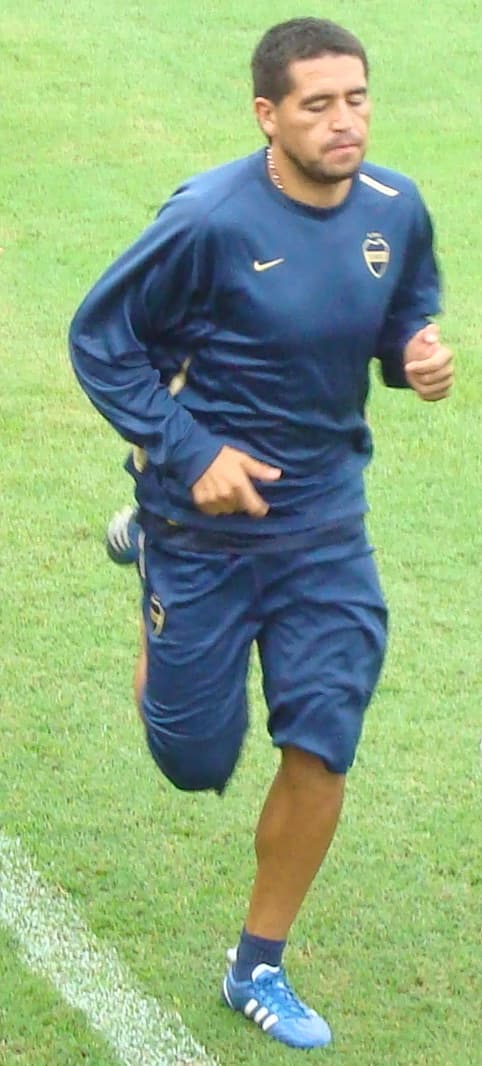
Derived from the Spanish word for 'hook,' the Enganche is the traditional South American playmaker who links the midfield directly to the attack. Unlike the free-roaming Trequartista, who often drifts wide or runs beyond the striker, the Enganche operates from a highly fixed central hub. This player serves as the stationary pivot around whom the team rotates, receiving possession under pressure and distributing it to advancing forwards. This archetype is epitomized by Juan Román Riquelme, whose game relied on holding off defenders, controlling the tempo, and exploiting defensive gaps with precise passes. Riquelme's ability to operate in tight spaces, absorb physical pressure, and release the ball at the exact moment a teammate made their run made him the defining Enganche of his generation.
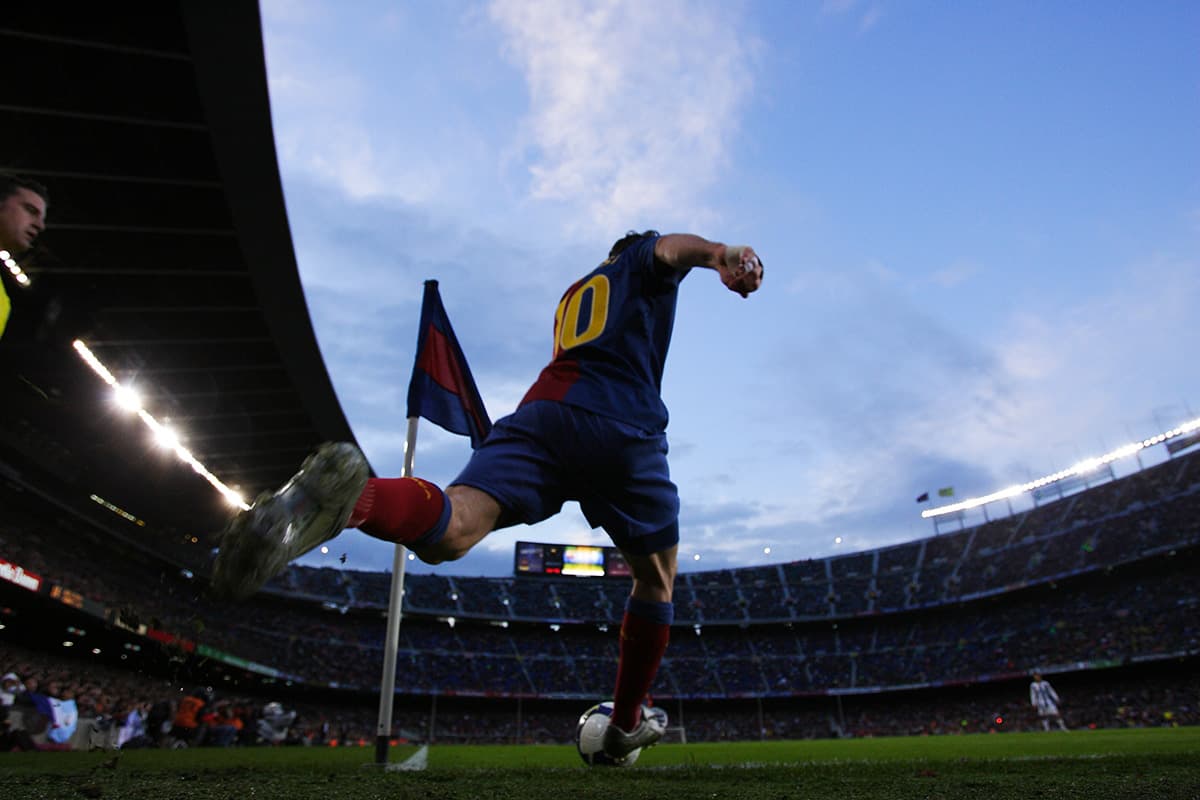
While the concept of a deep-dropping striker has historical precedents, Pep Guardiola and Lionel Messi modernized the role at Barcelona. Operating as a False Nine, Messi would nominalize himself as a central striker before dropping deep into midfield. This movement presented opposition center-backs with a difficult choice: step forward to follow him, which vacated space behind the defensive line for inverted wingers to exploit, or remain in position, allowing Barcelona to establish a numerical midfield overload. This positional deception turned the striker role from a physical focal point into a primary playmaker, changing how modern defenses organize their central coverage. The False Nine became the defining tactical innovation of Guardiola's Barcelona era, dismantling teams who relied on compact central defensive blocks.
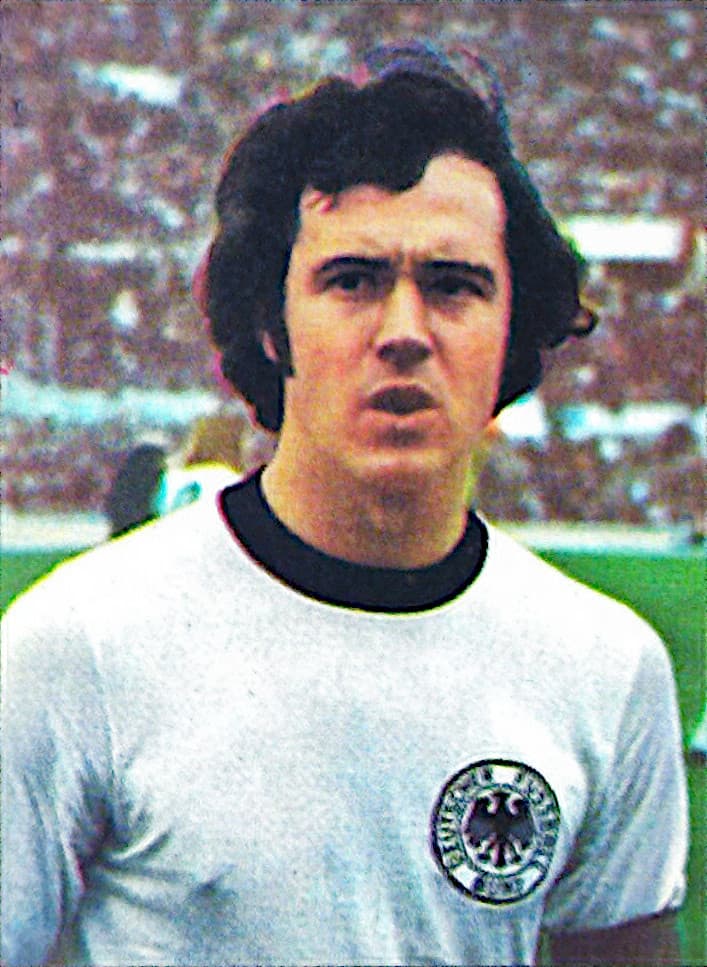
The Libero (sweeper) began as a purely defensive role, positioned behind the backline to clear stray passes and cover defensive lapses. In the late 1960s, Bayern Munich and West Germany icon Franz Beckenbauer transformed the position. Lacking a direct marker when in possession, Beckenbauer stepped forward from the defensive line into midfield. By advancing past the first line of defense with the ball, he created central overloads, turning a defensive containment role into a primary playmaking position. This hybrid role required exceptional passing range, physical composure, and tactical vision, shifting the sweeper from a reactive defender into an offensive catalyst. Beckenbauer's interpretation of the libero remains the most influential positional evolution in football history.
The Trequartista operates in the 'three-quarter' space between the opponent's midfield and defensive lines. Excused from defensive duties, this player relies on individual flair, dribbling ability, and quick thinking to unlock compact defenses. While modern pressing has reduced the viability of the pure Trequartista, its influence persists in creative attacking midfielders who operate in tight spaces, such as Roberto Baggio, Alessandro Del Piero, or Gianfranco Zola. The broader tradition of the Number Ten — encompassing the Trequartista, the Enganche, and the classic playmaker — has been marginalized by the tactical evolution of modern football. High-pressing systems demand that every player contribute defensively, leaving little room for a stationary creative hub exempt from physical duels. The decline of the traditional Number Ten reflects a shift in football philosophy: from individual genius as the primary attacking weapon to collective pressing and transition as the dominant paradigm. While hybrid creative roles still exist, the pure, defense-free Number Ten has become one of football's lost arts.
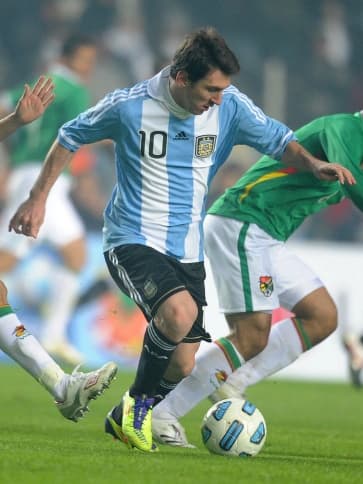
Lionel Messi's dribbling style is characterized by elite biomechanical efficiency and rapid neuromuscular coordination. Standing at 1.77 meters, Messi has a low center of mass, positioned approximately 0.9 meters from the ground. This low center of mass minimizes his rotational inertia, allowing him to absorb and redirect ground reaction forces (GRF) during rapid cuts. This efficiency reduces his turn latency by 0.2 to 0.3 seconds compared to taller professional peers. Biomechanical analysis reveals that his step ground contact time ranges between 0.12 and 0.15 seconds, significantly below the typical 0.18 to 0.20 seconds of average professional players. Additionally, his electromechanical delay (EMD)—the time between neural activation and muscle force output—is estimated at 40 milliseconds, far below the standard 60-millisecond threshold, enabling rapid, unpredictable changes of direction. Beyond his physical acceleration, Messi's dribbling is guided by highly developed visual-motor coupling and sensory systems. Eye-tracking studies demonstrate that Messi does not fixate on the ball during active dribbling; he looks at the ball less than 30 percent of the time. The remaining 70 percent of his gaze is dedicated to monitoring the positioning of opponents and identifying vacant spaces. This skill relies on advanced vestibular-cerebellar integration, which maintains his equilibrium and visual stability during rapid movement, supported by highly developed proprioception allowing micro-adjustments to his touch without visual confirmation.
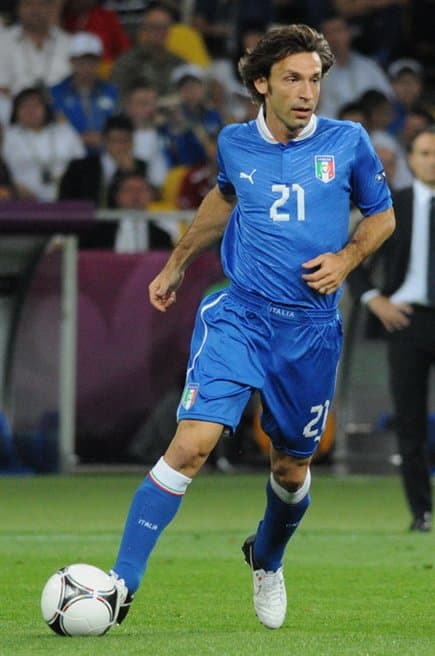
The Regista (director) is a deep-lying playmaker positioned just in front of the defensive line. Rather than focusing on physical ball-winning, the Regista is tasked with organizing the team's build-up play and directing possession from deep. This role was popularized by Andrea Pirlo, who utilized his passing range and calm composure to dictate tempo from a deep position, bypassing high-pressing systems with long-range distribution. Pirlo's genius lay in his ability to receive the ball under pressure, scan the entire pitch in a single glance, and execute passes that unlocked compact defensive structures. Operating from deep, he created numerical superiority in midfield while remaining protected by the defensive line behind him — a role that required elite technical precision and spatial intelligence.
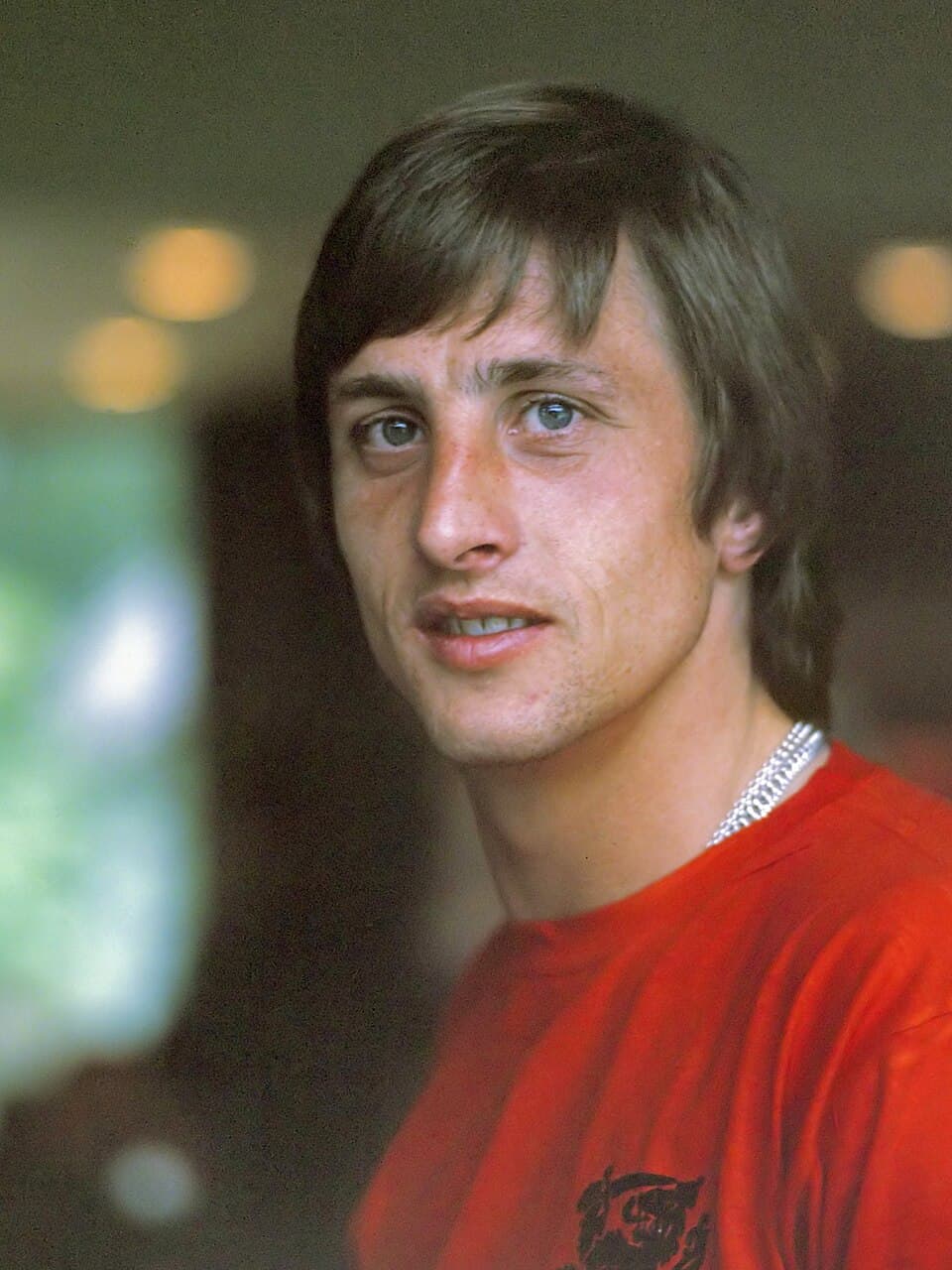
Johan Cruyff possessed a unique running style characterized by sudden changes of pace and physical elasticity. This was epitomized by the 'Cruyff Turn,' debuted at the 1974 World Cup. By pretending to cross the ball before dragging it back behind his standing leg and spinning 180 degrees, Cruyff rapidly shifted his weight, leaving defenders off-balance. This maneuver combined rapid deceleration with immediate acceleration, exploiting the defender's physical momentum and demonstrating how spatial awareness could overcome physical marking. The turn's brilliance lay not in complex technique but in its timing and deception — convincing the defender a cross was imminent, then instantly reversing direction and creating separation in a single fluid motion.