The permanent collection — plus this season's live anomalies at the end.
3 records found
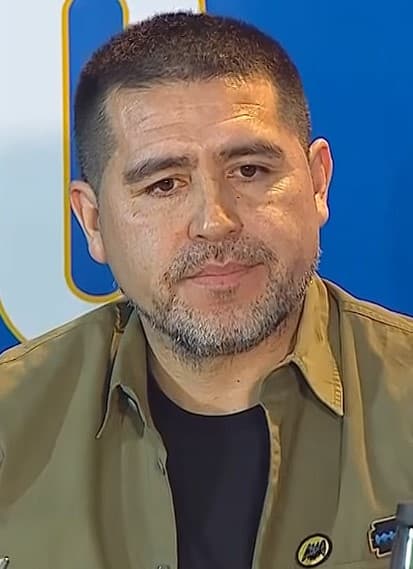
Derived from the Spanish word for 'hook,' the Enganche is the traditional South American playmaker who links the midfield directly to the attack. Unlike the free-roaming Trequartista, who often drifts wide or runs beyond the striker, the Enganche operates from a highly fixed central hub. This player serves as the stationary pivot around whom the team rotates, receiving possession under pressure and distributing it to advancing forwards. This archetype is epitomized by Juan Román Riquelme, whose game relied on holding off defenders, controlling the tempo, and exploiting defensive gaps with precise passes. Riquelme's ability to operate in tight spaces, absorb physical pressure, and release the ball at the exact moment a teammate made their run made him the defining Enganche of his generation.
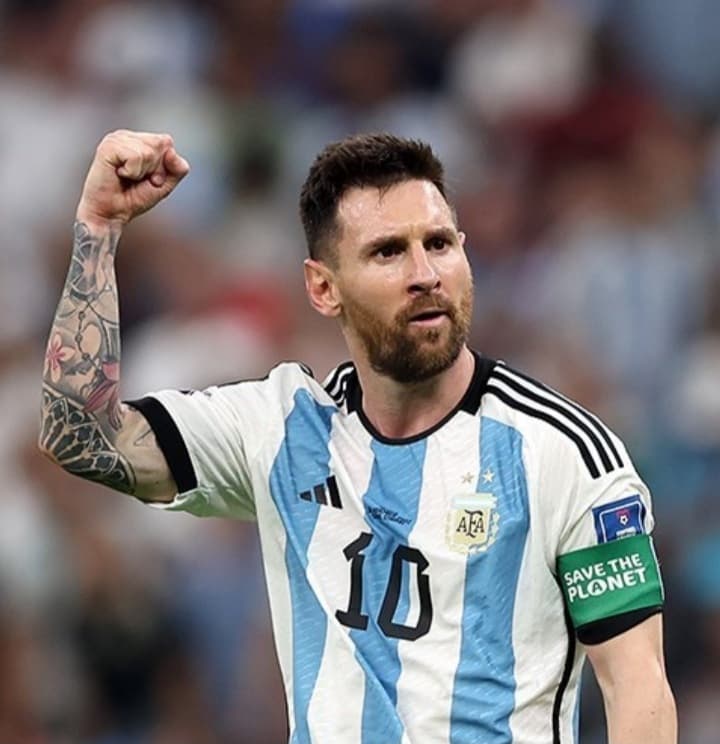
In 2012, Lionel Messi shattered Gerd Müller's long-standing record of 85 goals in a calendar year. Playing for Barcelona and Argentina, Messi scored 91 goals in 69 appearances — a feat that required sustaining a goal-scoring rate of over 7 goals per month against modern defensive setups for 12 consecutive months.
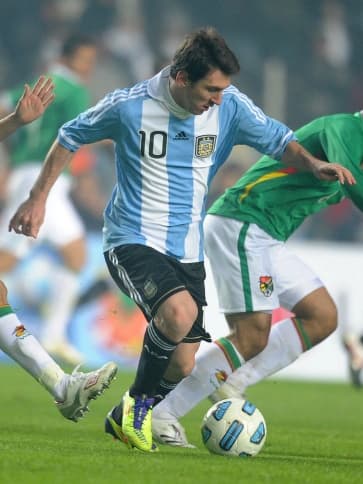
Lionel Messi's dribbling style is characterized by elite biomechanical efficiency and rapid neuromuscular coordination. Standing at 1.77 meters, Messi has a low center of mass, positioned approximately 0.9 meters from the ground. This low center of mass minimizes his rotational inertia, allowing him to absorb and redirect ground reaction forces (GRF) during rapid cuts. This efficiency reduces his turn latency by 0.2 to 0.3 seconds compared to taller professional peers. Biomechanical analysis reveals that his step ground contact time ranges between 0.12 and 0.15 seconds, significantly below the typical 0.18 to 0.20 seconds of average professional players. Additionally, his electromechanical delay (EMD)—the time between neural activation and muscle force output—is estimated at 40 milliseconds, far below the standard 60-millisecond threshold, enabling rapid, unpredictable changes of direction. Beyond his physical acceleration, Messi's dribbling is guided by highly developed visual-motor coupling and sensory systems. Eye-tracking studies demonstrate that Messi does not fixate on the ball during active dribbling; he looks at the ball less than 30 percent of the time. The remaining 70 percent of his gaze is dedicated to monitoring the positioning of opponents and identifying vacant spaces. This skill relies on advanced vestibular-cerebellar integration, which maintains his equilibrium and visual stability during rapid movement, supported by highly developed proprioception allowing micro-adjustments to his touch without visual confirmation.