The permanent collection — plus this season's live anomalies at the end.
2 records found
Lionel Messi's dribbling style is characterized by elite biomechanical efficiency and rapid neuromuscular coordination. Standing at 1.77 meters, Messi has a low center of mass, positioned approximately 0.9 meters from the ground. This low center of mass minimizes his rotational inertia, allowing him to absorb and redirect ground reaction forces (GRF) during rapid cuts. This efficiency reduces his turn latency by 0.2 to 0.3 seconds compared to taller professional peers. Biomechanical analysis reveals that his step ground contact time ranges between 0.12 and 0.15 seconds, significantly below the typical 0.18 to 0.20 seconds of average professional players. Additionally, his electromechanical delay (EMD)—the time between neural activation and muscle force output—is estimated at 40 milliseconds, far below the standard 60-millisecond threshold, enabling rapid, unpredictable changes of direction. Beyond his physical acceleration, Messi's dribbling is guided by highly developed visual-motor coupling and sensory systems. Eye-tracking studies demonstrate that Messi does not fixate on the ball during active dribbling; he looks at the ball less than 30 percent of the time. The remaining 70 percent of his gaze is dedicated to monitoring the positioning of opponents and identifying vacant spaces. This skill relies on advanced vestibular-cerebellar integration, which maintains his equilibrium and visual stability during rapid movement, supported by highly developed proprioception allowing micro-adjustments to his touch without visual confirmation.
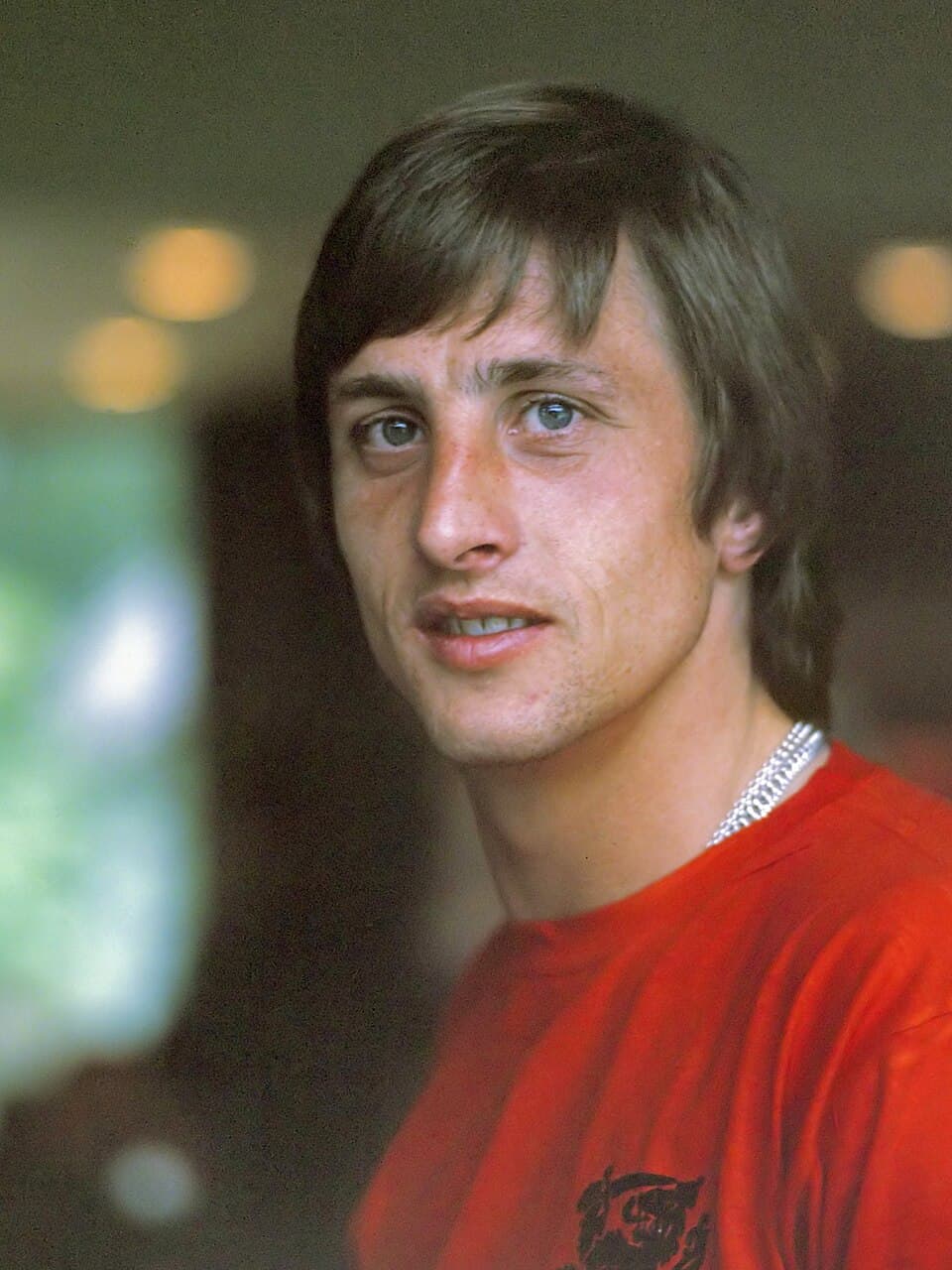
Johan Cruyff possessed a unique running style characterized by sudden changes of pace and physical elasticity. This was epitomized by the 'Cruyff Turn,' debuted at the 1974 World Cup. By pretending to cross the ball before dragging it back behind his standing leg and spinning 180 degrees, Cruyff rapidly shifted his weight, leaving defenders off-balance. This maneuver combined rapid deceleration with immediate acceleration, exploiting the defender's physical momentum and demonstrating how spatial awareness could overcome physical marking. The turn's brilliance lay not in complex technique but in its timing and deception — convincing the defender a cross was imminent, then instantly reversing direction and creating separation in a single fluid motion.