The permanent collection — plus this season's live anomalies at the end.
2 records found
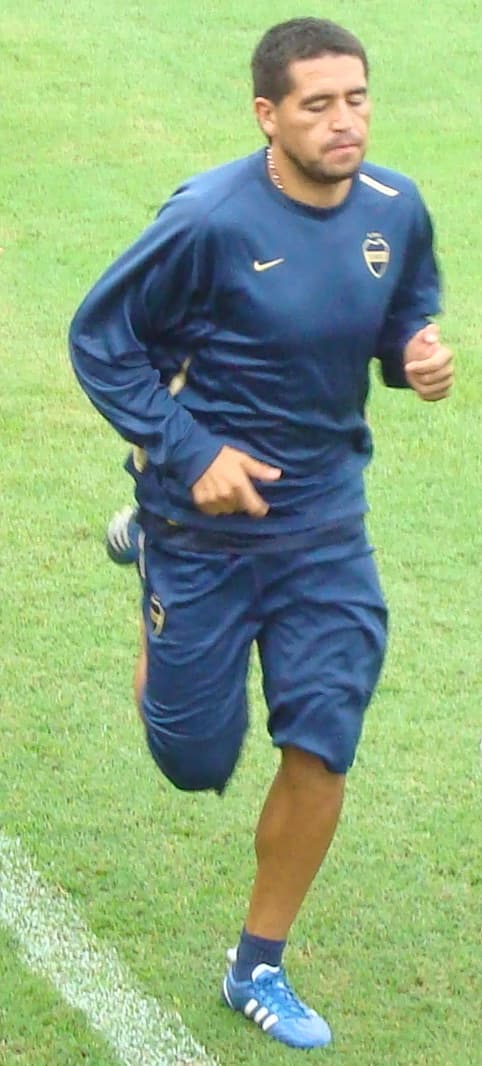
Derived from the Spanish word for 'hook,' the Enganche is the traditional South American playmaker who links the midfield directly to the attack. Unlike the free-roaming Trequartista, who often drifts wide or runs beyond the striker, the Enganche operates from a highly fixed central hub. This player serves as the stationary pivot around whom the team rotates, receiving possession under pressure and distributing it to advancing forwards. This archetype is epitomized by Juan Román Riquelme, whose game relied on holding off defenders, controlling the tempo, and exploiting defensive gaps with precise passes. Riquelme's ability to operate in tight spaces, absorb physical pressure, and release the ball at the exact moment a teammate made their run made him the defining Enganche of his generation.
The Trequartista operates in the 'three-quarter' space between the opponent's midfield and defensive lines. Excused from defensive duties, this player relies on individual flair, dribbling ability, and quick thinking to unlock compact defenses. While modern pressing has reduced the viability of the pure Trequartista, its influence persists in creative attacking midfielders who operate in tight spaces, such as Roberto Baggio, Alessandro Del Piero, or Gianfranco Zola. The broader tradition of the Number Ten — encompassing the Trequartista, the Enganche, and the classic playmaker — has been marginalized by the tactical evolution of modern football. High-pressing systems demand that every player contribute defensively, leaving little room for a stationary creative hub exempt from physical duels. The decline of the traditional Number Ten reflects a shift in football philosophy: from individual genius as the primary attacking weapon to collective pressing and transition as the dominant paradigm. While hybrid creative roles still exist, the pure, defense-free Number Ten has become one of football's lost arts.