Kit History
Pelé's Accidental Number Ten — How an Administrative Oversight Created Football's Most Prestigious Shirt
1958 World CupPeléBrazil
Published 2026-05-31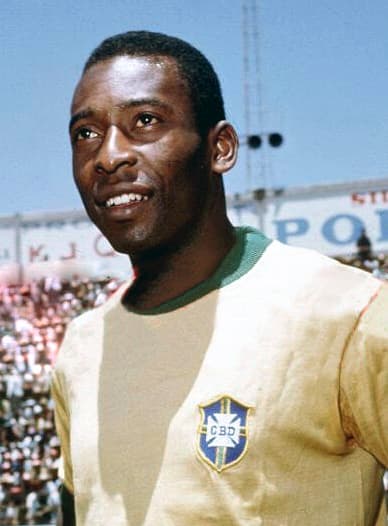
Exhibit Narrative
The CBF failed to submit their squad list in time — a Uruguayan FIFA official randomly assigned Pelé the Number Ten, turning an administrative error into the sport's most recognised number.
The association of the Number Ten shirt with elite playmaking is largely due to an administrative oversight by the Brazilian Football Confederation (CBF) ahead of the 1958 World Cup in Sweden. The CBF failed to submit a list of designated player numbers to the tournament organizers. Consequently, Lorenzo Villizzio, a Uruguayan FIFA official, assigned numbers 1 through 22 to the squad completely at random. This arbitrary allocation resulted in goalkeeper Gilmar receiving the Number Three shirt, while Pelé, an unproven 17-year-old substitute, was assigned the Number Ten. Pelé's brilliant performances during the tournament — scoring a hat-trick in the semi-final and two goals in the final — turned this random designation into the most prestigious number in the sport. What began as an administrative accident became the symbol of creative genius in football.
Related Records
World Cup Records
Pelé Wins Three FIFA World Cups (1958, 1962, 1970)
3 World Cup titles — the only player in history to achieve this.
Kit HistoryEintracht Braunschweig's Jägermeister Crest-Swap — The Deal That Legalized Kit Sponsorship
Braunschweig officially replaced their club crest with the Jägermeister stag logo — the DFB couldn't stop a club from wearing its own crest, and kit sponsorships were legalized seven months later.
Kit HistoryFiorentina's Banned 1992/93 Away Kit — The Inadvertent Swastikas
An abstract purple geometric pattern across the shoulders was well-received until observers noticed the overlapping lines formed a series of swastikas.