The permanent collection — plus this season's live anomalies at the end.
2 records found
Just Fontaine's 13 goals at the 1958 World Cup in Sweden stands as one of football's most unbreakable records. The French striker achieved this in just 6 matches, averaging over 2 goals per game — a feat virtually impossible today due to modern defensive organisation, sports science, and tactical sophistication. No player has come close since. For context, Miroslav Klose holds the all-time World Cup scoring record with 16 goals, but spread across 24 matches across four tournaments (2002-2014). Fontaine's density of scoring in a single tournament remains unparalleled and is widely considered impossible to replicate in contemporary football.
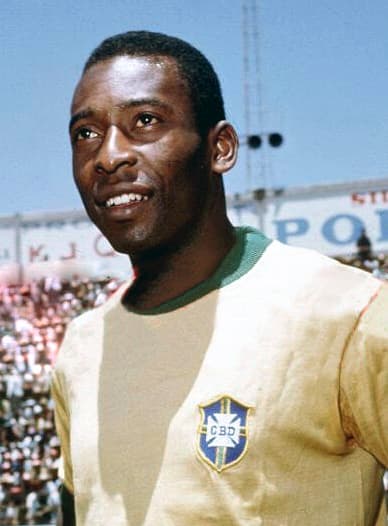
The association of the Number Ten shirt with elite playmaking is largely due to an administrative oversight by the Brazilian Football Confederation (CBF) ahead of the 1958 World Cup in Sweden. The CBF failed to submit a list of designated player numbers to the tournament organizers. Consequently, Lorenzo Villizzio, a Uruguayan FIFA official, assigned numbers 1 through 22 to the squad completely at random. This arbitrary allocation resulted in goalkeeper Gilmar receiving the Number Three shirt, while Pelé, an unproven 17-year-old substitute, was assigned the Number Ten. Pelé's brilliant performances during the tournament — scoring a hat-trick in the semi-final and two goals in the final — turned this random designation into the most prestigious number in the sport. What began as an administrative accident became the symbol of creative genius in football.