Football Tactics
The 1925 Offside Reform and the Genesis of the WM Formation
1925–1930sArsenal
Published 2026-05-31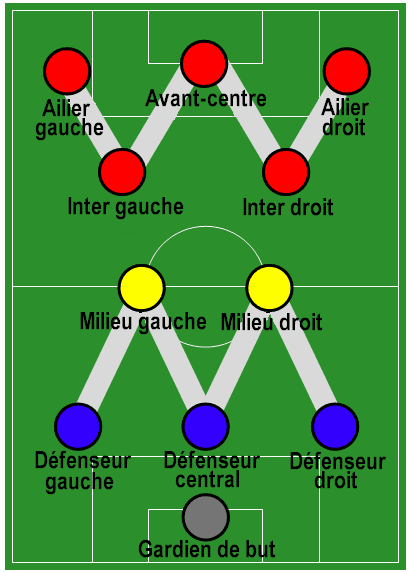
Exhibit Narrative
A single-word IFAB amendment in 1925 caused first-division goals to surge by 43% in one season — from 1,192 to 1,703.
On June 13, 1925, the International Football Association Board (IFAB) reduced the offside requirement from three defending players to two. Prior to this reform, defending teams had mastered the 'one-back game' — a highly negative strategy where one fullback stayed deep while the other stepped up to trap attackers, paralyzing match play with constant offside whistles and depressing goal-scoring. The SFA-proposed change immediately opened up attacking play. On the opening Saturday of the 1925/26 English Division One season, average goals per game rose to 3.7 compared to the 3.1 average of the previous season. Across the entire campaign, first-division goals surged by 43 percent, increasing from 1,192 to 1,703. Recognizing that traditional two-back defenses were now exposed, Arsenal manager Herbert Chapman withdrew his central midfielder into a deep central defensive role to create a third fullback, flanked by two half-backs, with two attacking midfielders supporting a five-man forward line. This structural adjustment layered the team into a 3-2-2-3 shape — resembling the letters 'W' and 'M' — which established the primary tactical template of European football for the next three decades.
Related Records
Football Tactics
The 1992 Back-Pass Rule — The Regulation That Created the Modern Goalkeeper
IFAB banned deliberate back-passes to goalkeepers on May 30, 1992 — immediately transforming goalkeeping from hand-based containment to foot-based playmaking.
Football TacticsGegenpressing — The High Press Weapon of Ralf Rangnick and Jürgen Klopp
Gegenpressing requires players to press the opponent within the first 5 to 8 seconds of losing possession — turning defense into an offensive weapon.
Team RecordsArsenal's 49-Match Unbeaten Premier League Run (2003–2004)
49 consecutive Premier League matches without defeat — the only undefeated season in modern English top-flight history.