The permanent collection — plus this season's live anomalies at the end.
1 record found
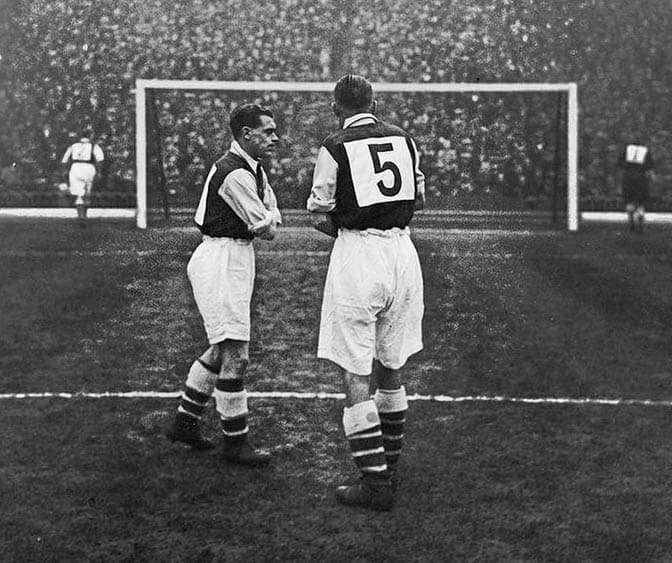
Shirt numbering debuted in professional European league football on August 25, 1928. Arsenal's Herbert Chapman introduced numbers for their match against Sheffield Wednesday, while Chelsea hosted Swansea Town wearing numbers. Under this initial system, one team wore numbers 1 through 11, while the other wore 12 through 22. The Football League Management Committee resisted the innovation for over a decade, but finally ruled shirt numbers mandatory for the 1939/40 season, assigning numbers 1 through 11 to the starting lineup based on position. South America's numbered debut came even earlier: Argentina was the first South American country to use numbered jerseys on June 10, 1923, during a friendly match between Scottish touring club Third Lanark and a local combined team called 'Zona Norte'. Both teams wore numbers 1 through 11, a sight that surprised the local crowd. When English club Chelsea toured South America in 1929 wearing numbered kits, local spectators nicknamed them 'Los Numerados' ('the numbered'), marking an early step in the adoption of squad numbers across South America. The 1993/94 season introduced fixed squad numbers in English football, allowing players to choose unconventional numbers — from Cristiano Lupatelli's goalkeeper Number Ten to Jonathan de Guzman's midfielder Number One.