Kit History
The History of Shirt Numbers in Football — From 1928 Debut to Mandatory Assignment
1928–1939
Published 2026-05-31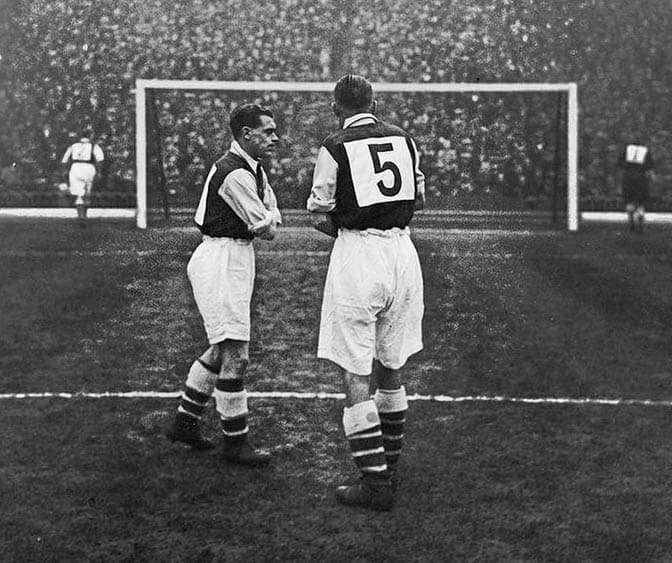
Exhibit Narrative
Shirt numbering debuted on August 25, 1928 — Herbert Chapman introduced it for Arsenal vs Sheffield Wednesday; the Football League made it mandatory for the 1939/40 season.
Shirt numbering debuted in professional European league football on August 25, 1928. Arsenal's Herbert Chapman introduced numbers for their match against Sheffield Wednesday, while Chelsea hosted Swansea Town wearing numbers. Under this initial system, one team wore numbers 1 through 11, while the other wore 12 through 22. The Football League Management Committee resisted the innovation for over a decade, but finally ruled shirt numbers mandatory for the 1939/40 season, assigning numbers 1 through 11 to the starting lineup based on position. South America's numbered debut came even earlier: Argentina was the first South American country to use numbered jerseys on June 10, 1923, during a friendly match between Scottish touring club Third Lanark and a local combined team called 'Zona Norte'. Both teams wore numbers 1 through 11, a sight that surprised the local crowd. When English club Chelsea toured South America in 1929 wearing numbered kits, local spectators nicknamed them 'Los Numerados' ('the numbered'), marking an early step in the adoption of squad numbers across South America. The 1993/94 season introduced fixed squad numbers in English football, allowing players to choose unconventional numbers — from Cristiano Lupatelli's goalkeeper Number Ten to Jonathan de Guzman's midfielder Number One.
Related Records
Kit History
Pelé's Accidental Number Ten — How an Administrative Oversight Created Football's Most Prestigious Shirt
The CBF failed to submit their squad list in time — a Uruguayan FIFA official randomly assigned Pelé the Number Ten, turning an administrative error into the sport's most recognised number.
Kit HistoryEintracht Braunschweig's Jägermeister Crest-Swap — The Deal That Legalized Kit Sponsorship
Braunschweig officially replaced their club crest with the Jägermeister stag logo — the DFB couldn't stop a club from wearing its own crest, and kit sponsorships were legalized seven months later.
Kit HistoryFiorentina's Banned 1992/93 Away Kit — The Inadvertent Swastikas
An abstract purple geometric pattern across the shoulders was well-received until observers noticed the overlapping lines formed a series of swastikas.