The permanent collection — plus this season's live anomalies at the end.
2 records found
While defensive Catenaccio is widely associated with Italian football, its foundation was laid in Switzerland. In 1932, Servette coach Karl Rappan developed the verrou ('door-bolt') system as a defensive counter-measure to the highly professionalized WM formations of central Europe. Rappan modified the traditional 2-3-5 system by dropping the two wing-halves back to flank the fullbacks, while a deep-lying defensive hybrid — the verrouilleur — sat just in front of the goalkeeper to sweep up loose balls and cover defensive gaps. This 1-3-3-3 structure shifted the sport away from rigid, man-to-man physical duels toward a zonal, covering defensive block. The verrou system evolved into Catenaccio under Nereo Rocco and Helenio Herrera. Rocco deployed the system in 1947 with Triestina, arranging his side in a strict 1-3-3-3 shape that relied on quick, vertical counter-attacks after winning possession. In the 1960s, Helenio Herrera refined the system at Internazionale into a highly disciplined 5-3-2 formation. Herrera assigned four rigid defenders to man-mark opposition attackers, while a designated libero (sweeper) operated behind the defensive line with total freedom to intercept stray passes and initiate rapid direct transitions. The tactical genius of the system lay in its psychological asymmetric advantage, allowing Inter to dominate European football through clinical, low-scoring efficiency.
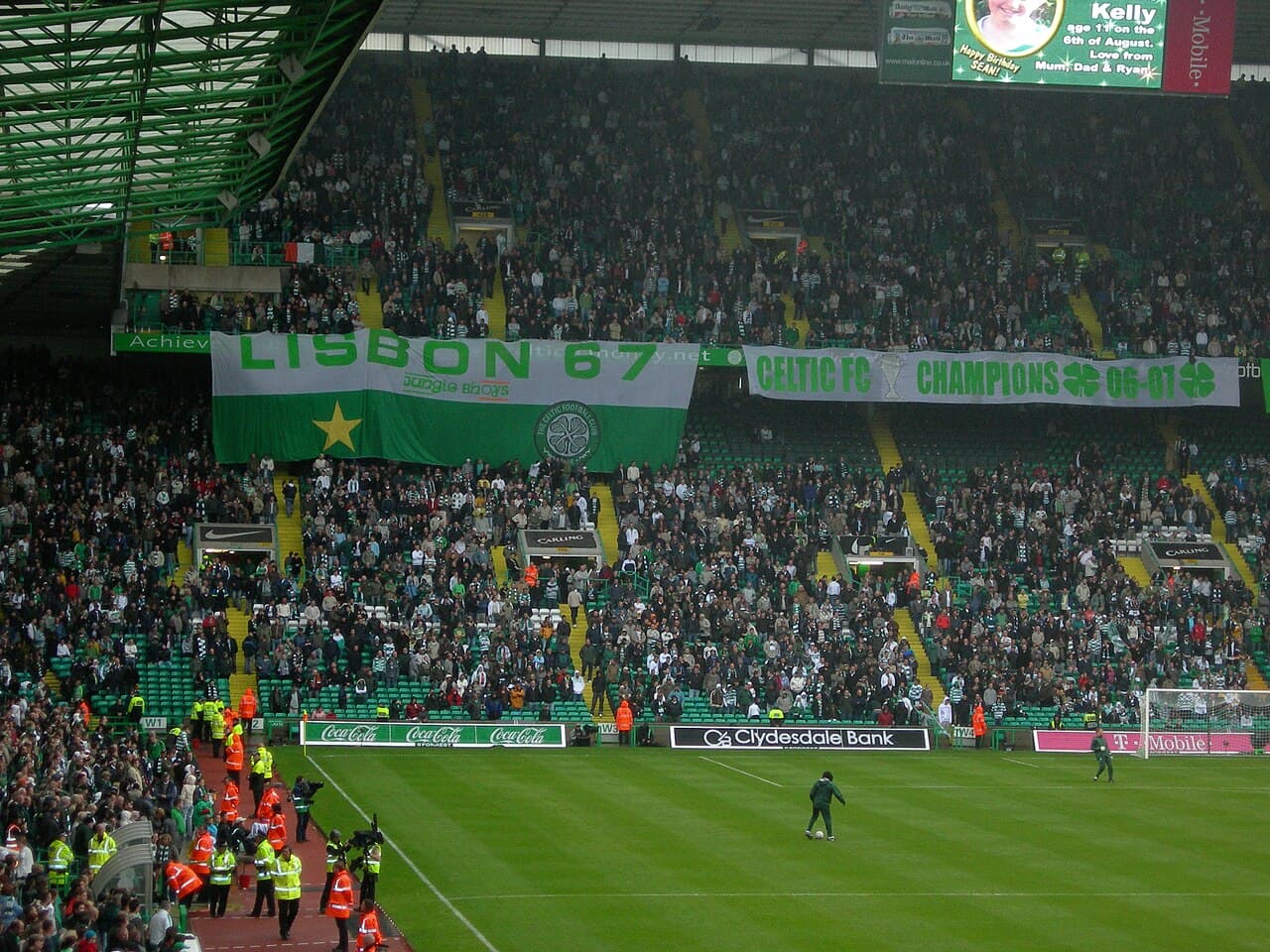
The 1967 European Cup Final in Lisbon represented a direct clash between Helenio Herrera's defensive Catenaccio and Jock Stein's attacking Celtic. Operating under the 5-3-2 Catenaccio, Internazionale took an early lead through a Sandro Mazzola penalty and immediately retreated into a deep, compact defensive block. Rather than playing into Inter's central trap, Jock Stein instructed his fullbacks, Tommy Gemmell and Bobby Murdoch, to overlap continuously and provide attacking width. Celtic dominated possession, registering 42 shots on goal. Gemmell scored the equalizer in the 63rd minute with a powerful strike, and Stevie Chalmers secured the 2-1 victory in the 84th minute. This result demonstrated that continuous, wide attacking movement could break down the most disciplined defensive blocks, marking the beginning of the decline of pure Catenaccio in European football.