Football Tactics
The Greatest Tactical Battle: Celtic vs. Internazionale, 1967 European Cup Final
May 25, 1967Celtic
Published 2026-05-31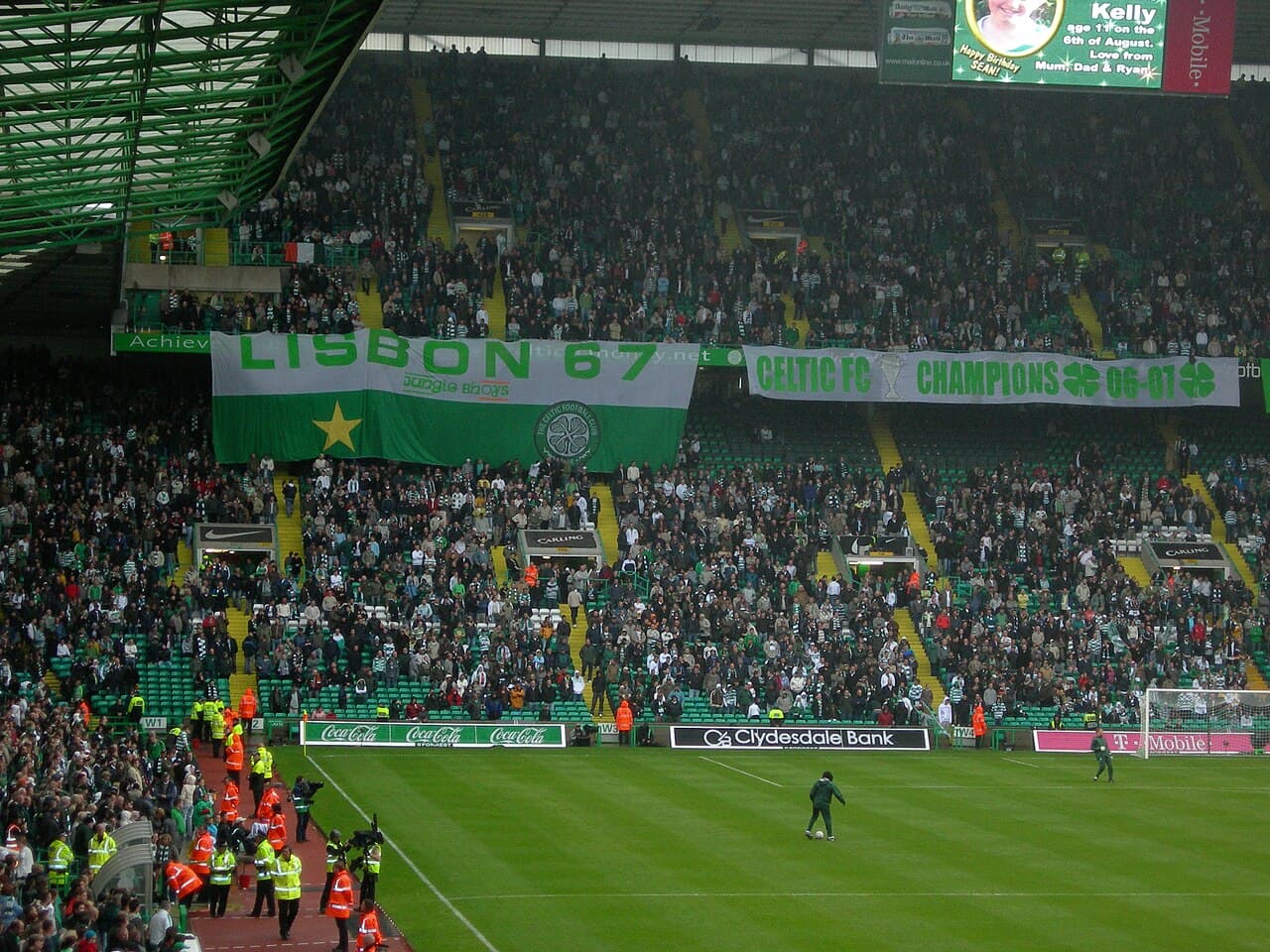
Exhibit Narrative
Celtic registered 42 shots against Herrera's Catenaccio, breaking the most disciplined defensive block in European history to win 2-1 in Lisbon.
The 1967 European Cup Final in Lisbon represented a direct clash between Helenio Herrera's defensive Catenaccio and Jock Stein's attacking Celtic. Operating under the 5-3-2 Catenaccio, Internazionale took an early lead through a Sandro Mazzola penalty and immediately retreated into a deep, compact defensive block. Rather than playing into Inter's central trap, Jock Stein instructed his fullbacks, Tommy Gemmell and Bobby Murdoch, to overlap continuously and provide attacking width. Celtic dominated possession, registering 42 shots on goal. Gemmell scored the equalizer in the 63rd minute with a powerful strike, and Stevie Chalmers secured the 2-1 victory in the 84th minute. This result demonstrated that continuous, wide attacking movement could break down the most disciplined defensive blocks, marking the beginning of the decline of pure Catenaccio in European football.
Related Records
Football Tactics
Catenaccio — From Karl Rappan's Verrou to Helenio Herrera's Inter Milan
Herrera's Catenaccio at Inter assigned four rigid man-markers and one free libero — dominating Europe through clinical, low-scoring efficiency.
Football TacticsThe 1992 Back-Pass Rule — The Regulation That Created the Modern Goalkeeper
IFAB banned deliberate back-passes to goalkeepers on May 30, 1992 — immediately transforming goalkeeping from hand-based containment to foot-based playmaking.
Football TacticsGegenpressing — The High Press Weapon of Ralf Rangnick and Jürgen Klopp
Gegenpressing requires players to press the opponent within the first 5 to 8 seconds of losing possession — turning defense into an offensive weapon.