Kit History
The First Kit Sponsor in Football History — Fall River Rovers, 1887
1887Fall River Rovers
Published 2026-05-31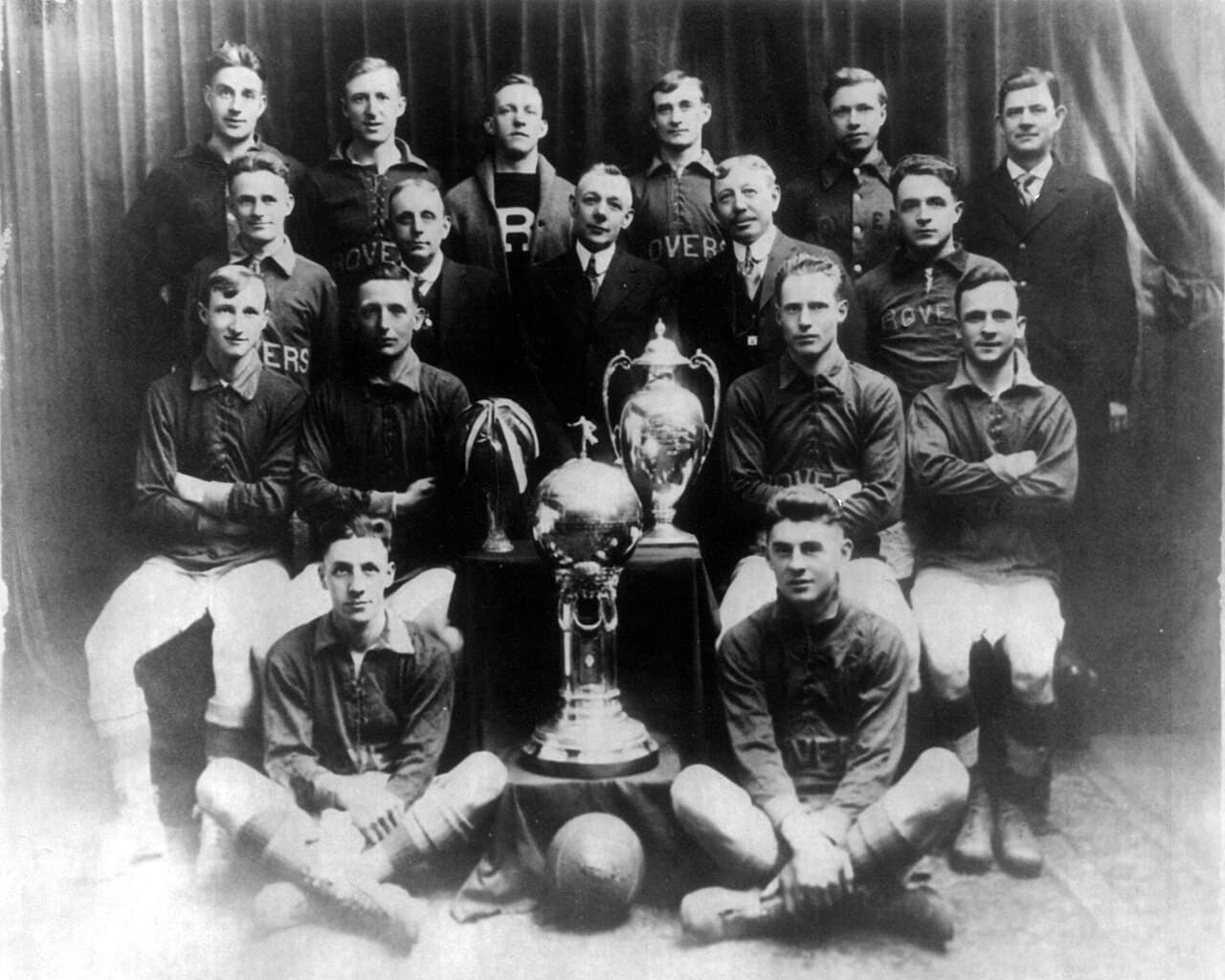
Exhibit Narrative
On February 23, 1887, the Fall River Rovers of Massachusetts wore yellow shirts with 'Hargreave Manufacturing Company Rovers' printed across the front — the first commercial kit sponsorship in football history.
While kit sponsorship is generally viewed as an innovation of the 1970s, the practice was pioneered nearly a century earlier in the United States. On February 23, 1887, the Newark Evening News published a match report describing the Fall River Rovers of Massachusetts appearing in yellow shirts with 'Hargreave Manufacturing Company Rovers' printed across the front. The Hargreave Manufacturing Company was an independent local soap manufacturer, making this the first recorded instance of an independent commercial brand purchasing advertising space on a football kit. This early experiment did not immediately spark a trend, but it established the United States as the birthplace of commercial kit sponsorships — nearly 90 years before Eintracht Braunschweig's famous Jägermeister deal forced the German FA to legalize the practice.
Related Records
Kit History
Eintracht Braunschweig's Jägermeister Crest-Swap — The Deal That Legalized Kit Sponsorship
Braunschweig officially replaced their club crest with the Jägermeister stag logo — the DFB couldn't stop a club from wearing its own crest, and kit sponsorships were legalized seven months later.
Kit HistoryPelé's Accidental Number Ten — How an Administrative Oversight Created Football's Most Prestigious Shirt
The CBF failed to submit their squad list in time — a Uruguayan FIFA official randomly assigned Pelé the Number Ten, turning an administrative error into the sport's most recognised number.
Kit HistoryFiorentina's Banned 1992/93 Away Kit — The Inadvertent Swastikas
An abstract purple geometric pattern across the shoulders was well-received until observers noticed the overlapping lines formed a series of swastikas.