The permanent collection — plus this season's live anomalies at the end.
7 records found
The modern 'sweeper-keeper' was born from a regulation change introduced to rescue football from defensive time-wasting. The 1990 FIFA World Cup in Italy represented a defensive low point for the sport, yielding an all-time tournament low of 2.21 goals per match. Teams routinely protected narrow leads by booting the ball back to their goalkeepers, who could legally handle the ball and run down the clock. During a group stage match between Ireland and Egypt, Irish goalkeeper Packie Bonner held the ball in his hands for approximately six minutes of active play. To address this, FIFA technical director Daniel Jeandupeux proposed a formal ban on goalkeepers handling deliberate back-passes kicked from the feet of teammates, which was officially adopted by IFAB on May 30, 1992. The rule debuted at the 1992 Barcelona Olympics, immediately causing defensive chaos. In the opening match, Italian goalkeeper Francesco Antonioli was penalized for handling a back-pass, resulting in an indirect free-kick from which Joe-Max Moore scored for the United States. This single regulation systematically transformed goalkeeping, forcing players to master footwork and distribution, directly giving rise to modern playmaking goalkeepers.
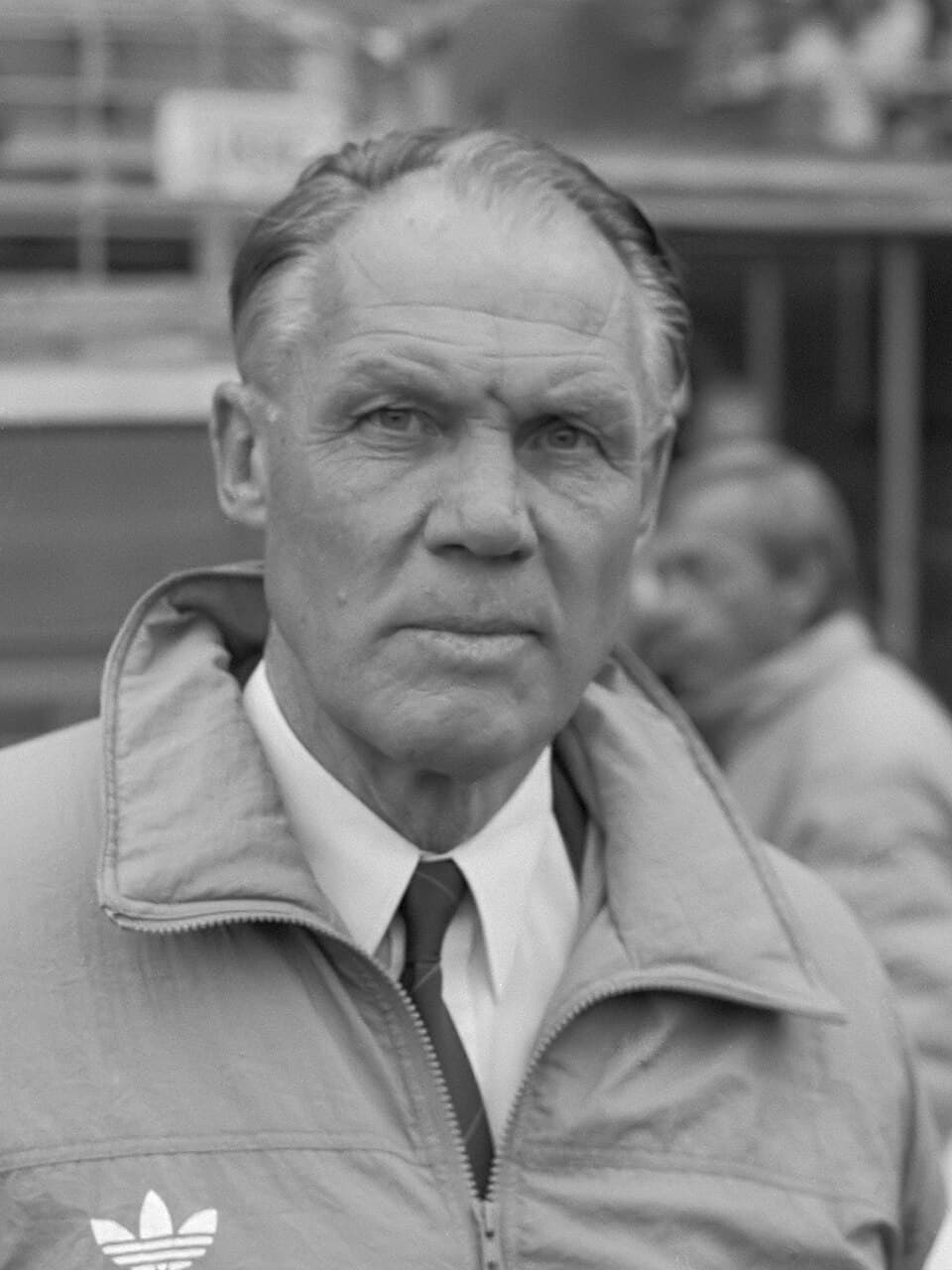
While defensive Catenaccio is widely associated with Italian football, its foundation was laid in Switzerland. In 1932, Servette coach Karl Rappan developed the verrou ('door-bolt') system as a defensive counter-measure to the highly professionalized WM formations of central Europe. Rappan modified the traditional 2-3-5 system by dropping the two wing-halves back to flank the fullbacks, while a deep-lying defensive hybrid — the verrouilleur — sat just in front of the goalkeeper to sweep up loose balls and cover defensive gaps. This 1-3-3-3 structure shifted the sport away from rigid, man-to-man physical duels toward a zonal, covering defensive block. The verrou system evolved into Catenaccio under Nereo Rocco and Helenio Herrera. Rocco deployed the system in 1947 with Triestina, arranging his side in a strict 1-3-3-3 shape that relied on quick, vertical counter-attacks after winning possession. In the 1960s, Helenio Herrera refined the system at Internazionale into a highly disciplined 5-3-2 formation. Herrera assigned four rigid defenders to man-mark opposition attackers, while a designated libero (sweeper) operated behind the defensive line with total freedom to intercept stray passes and initiate rapid direct transitions. The tactical genius of the system lay in its psychological asymmetric advantage, allowing Inter to dominate European football through clinical, low-scoring efficiency.
As possession-oriented systems became more dominant, coaches like Ralf Rangnick and Jürgen Klopp developed Gegenpressing (counter-pressing) as an active defensive weapon. Rather than retreating into a defensive block upon losing possession, Gegenpressing requires players to immediately press the opponent within the first five to eight seconds, exploiting the temporary disorganization of the transitioning team. This modern high press turned defensive action into an offensive playmaking tool, utilizing high turnovers to create goal-scoring opportunities before the opponent's defense could organize, shifting focus toward physical intensity and rapid transition play. The system's success depends on collective sprint capacity, spatial anticipation, and a shared tactical understanding of pressing triggers — when, where, and whom to press as a unit.
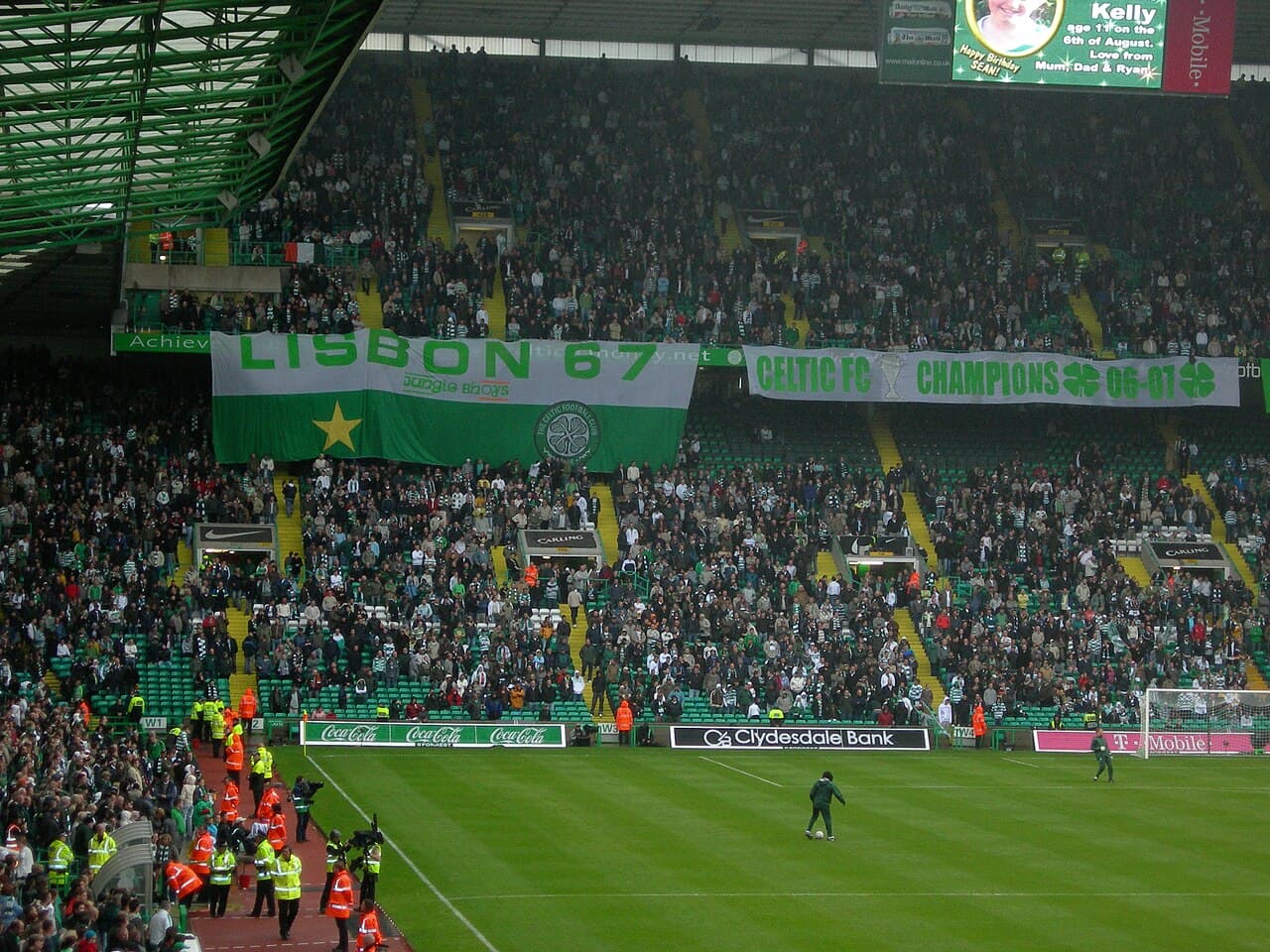
The 1967 European Cup Final in Lisbon represented a direct clash between Helenio Herrera's defensive Catenaccio and Jock Stein's attacking Celtic. Operating under the 5-3-2 Catenaccio, Internazionale took an early lead through a Sandro Mazzola penalty and immediately retreated into a deep, compact defensive block. Rather than playing into Inter's central trap, Jock Stein instructed his fullbacks, Tommy Gemmell and Bobby Murdoch, to overlap continuously and provide attacking width. Celtic dominated possession, registering 42 shots on goal. Gemmell scored the equalizer in the 63rd minute with a powerful strike, and Stevie Chalmers secured the 2-1 victory in the 84th minute. This result demonstrated that continuous, wide attacking movement could break down the most disciplined defensive blocks, marking the beginning of the decline of pure Catenaccio in European football.
Between 2008 and 2012, Pep Guardiola's Barcelona and the Spain national team dominated global football through Tiki-Taka, a possession-oriented tactical system built on short, rhythmic passing combinations and positional manipulation. The system adapted the core principles of Total Football, utilizing the 'third-man run' to bypass defensive lines and secure numerical overloads in midfield. Rather than passing merely to retain possession, Tiki-Taka aimed to draw opponents out of their defensive shapes, creating vertical passing lanes into central spaces. The system relied on technical precision, high positioning, and immediate recovery of the ball upon losing possession, setting a new standard for technical football. The greatest proving ground was the UEFA Champions League, where Barcelona's midfield mastery — orchestrated by Xavi, Iniesta, and Busquets — dismantled opponents who sat deep in compact blocks.
By the 1970s, the defensive rigidity of Catenaccio had met its match in Totaalvoetbal (Total Football), pioneered by coach Rinus Michels and epitomized by playmaker Johan Cruyff at Ajax and the Netherlands national team. Total Football bypassed rigid formational constraints through positional interchangeability: when a player moved out of position, a teammate instantly filled the space, maintaining the team's structural integrity. The system relied heavily on expanding and compressing the pitch, using an aggressive high defensive line and coordinated offside traps to restrict the opponent's thinking time. This system required elite physical conditioning and high spatial intelligence, systematically exposing the vulnerabilities of rigid, man-marking defensive systems. The greatest proving ground was the 1974 FIFA World Cup, where the Dutch reached the final before losing to West Germany.
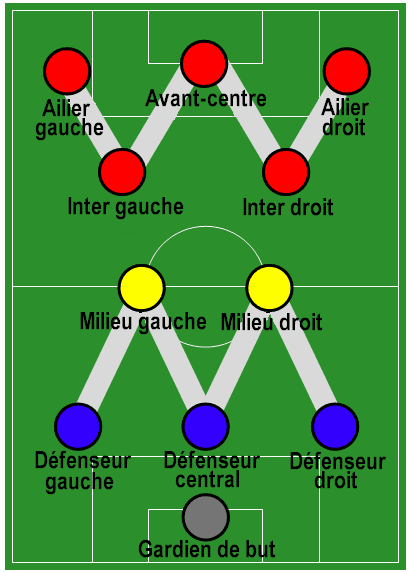
On June 13, 1925, the International Football Association Board (IFAB) reduced the offside requirement from three defending players to two. Prior to this reform, defending teams had mastered the 'one-back game' — a highly negative strategy where one fullback stayed deep while the other stepped up to trap attackers, paralyzing match play with constant offside whistles and depressing goal-scoring. The SFA-proposed change immediately opened up attacking play. On the opening Saturday of the 1925/26 English Division One season, average goals per game rose to 3.7 compared to the 3.1 average of the previous season. Across the entire campaign, first-division goals surged by 43 percent, increasing from 1,192 to 1,703. Recognizing that traditional two-back defenses were now exposed, Arsenal manager Herbert Chapman withdrew his central midfielder into a deep central defensive role to create a third fullback, flanked by two half-backs, with two attacking midfielders supporting a five-man forward line. This structural adjustment layered the team into a 3-2-2-3 shape — resembling the letters 'W' and 'M' — which established the primary tactical template of European football for the next three decades.