The permanent collection — plus this season's live anomalies at the end.
5 records found
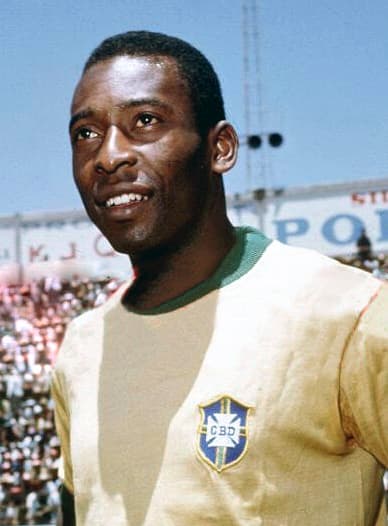
The association of the Number Ten shirt with elite playmaking is largely due to an administrative oversight by the Brazilian Football Confederation (CBF) ahead of the 1958 World Cup in Sweden. The CBF failed to submit a list of designated player numbers to the tournament organizers. Consequently, Lorenzo Villizzio, a Uruguayan FIFA official, assigned numbers 1 through 22 to the squad completely at random. This arbitrary allocation resulted in goalkeeper Gilmar receiving the Number Three shirt, while Pelé, an unproven 17-year-old substitute, was assigned the Number Ten. Pelé's brilliant performances during the tournament — scoring a hat-trick in the semi-final and two goals in the final — turned this random designation into the most prestigious number in the sport. What began as an administrative accident became the symbol of creative genius in football.
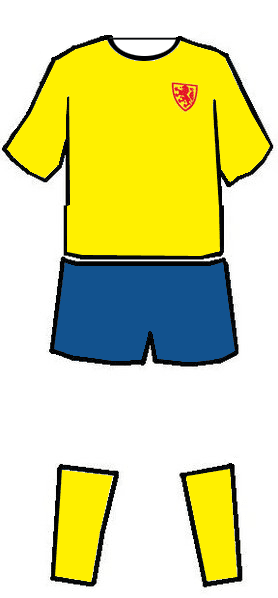
In 1973, German club Eintracht Braunschweig sought to secure a sponsorship deal with liquor company Jägermeister. However, the German Football Association (DFB) strictly banned commercial advertising on player kits, permitting only the club's official crest to be displayed. To bypass this restriction, Braunschweig's board voted to officially replace the club's traditional lion crest with the Jägermeister stag logo. Unable to prevent the club from displaying its own crest, the DFB was forced to permit the design. Seven months later, recognizing the commercial opportunities of the practice, the DFB officially legalized kit sponsorships, establishing a key milestone in football commercialization. The clever legal workaround turned a single club's ambition into an industry-wide revolution.
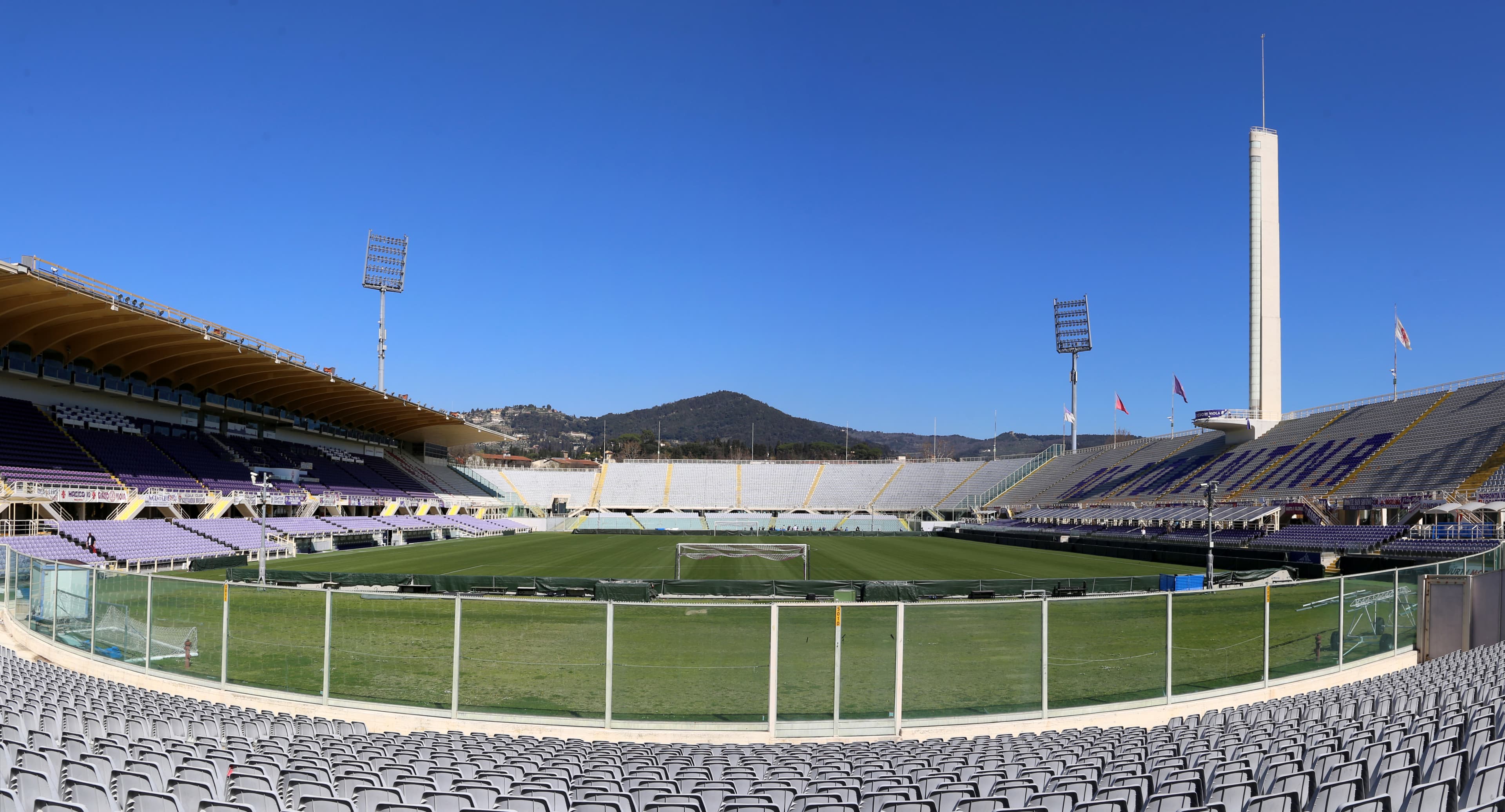
Prior to the 1992/93 Serie A season, Italian club Fiorentina and manufacturer Lotto released an away kit featuring an abstract, purple geometric pattern across the shoulders. The design was well-received until observers noticed that the overlapping geometric lines formed a series of swastikas. For a club seeking to distance itself from historic fascist associations, the discovery was a major public relations crisis. Fiorentina had already worn the kit in away fixtures against four Serie A rivals before the club and Lotto pulled it from production, replacing it with a plain white design. Despite the controversy, the shirt has become a highly sought-after item among football kit collectors — a rare example of a design so offensive it had to be banned after release, yet so distinctive it became a cult artifact.
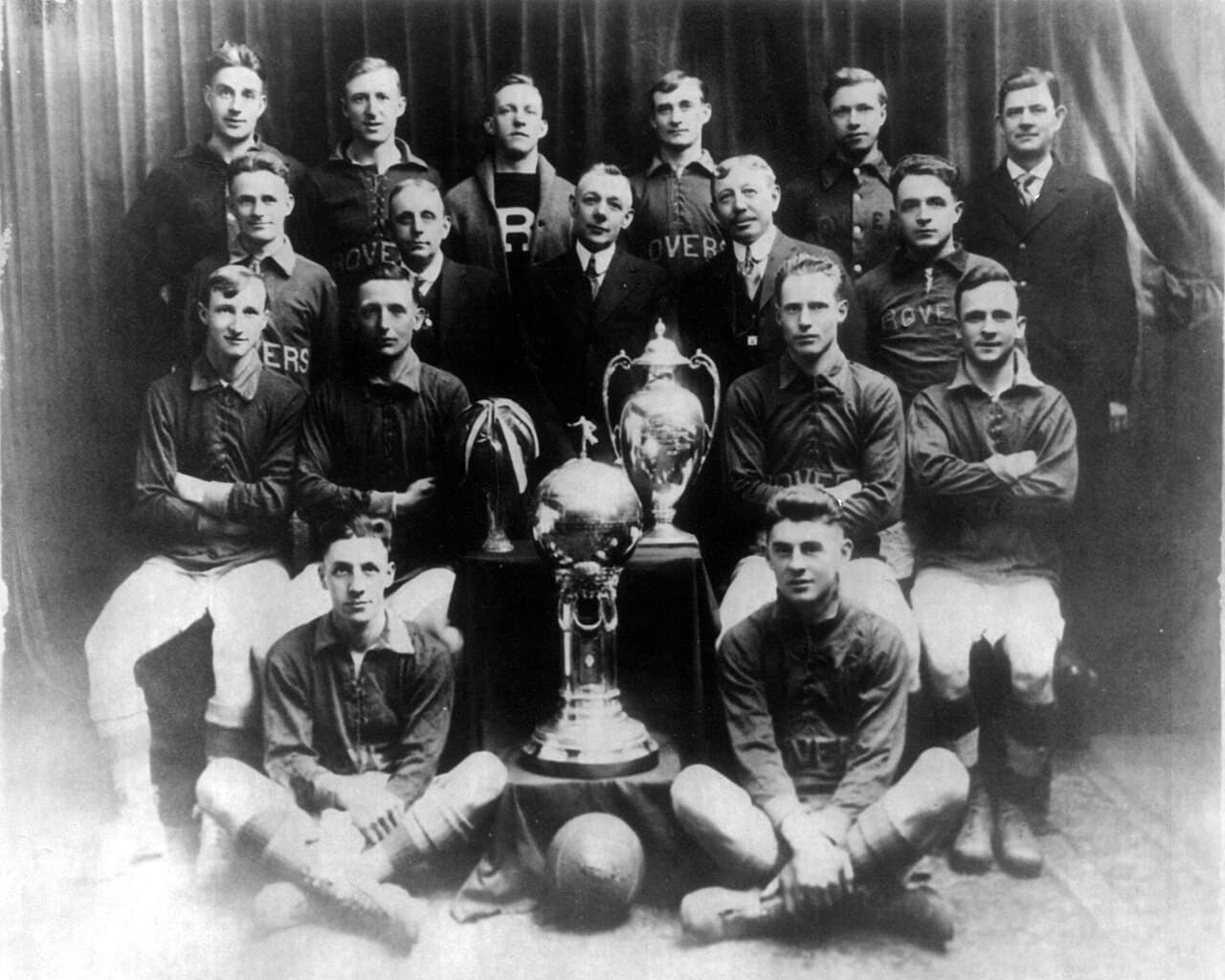
While kit sponsorship is generally viewed as an innovation of the 1970s, the practice was pioneered nearly a century earlier in the United States. On February 23, 1887, the Newark Evening News published a match report describing the Fall River Rovers of Massachusetts appearing in yellow shirts with 'Hargreave Manufacturing Company Rovers' printed across the front. The Hargreave Manufacturing Company was an independent local soap manufacturer, making this the first recorded instance of an independent commercial brand purchasing advertising space on a football kit. This early experiment did not immediately spark a trend, but it established the United States as the birthplace of commercial kit sponsorships — nearly 90 years before Eintracht Braunschweig's famous Jägermeister deal forced the German FA to legalize the practice.
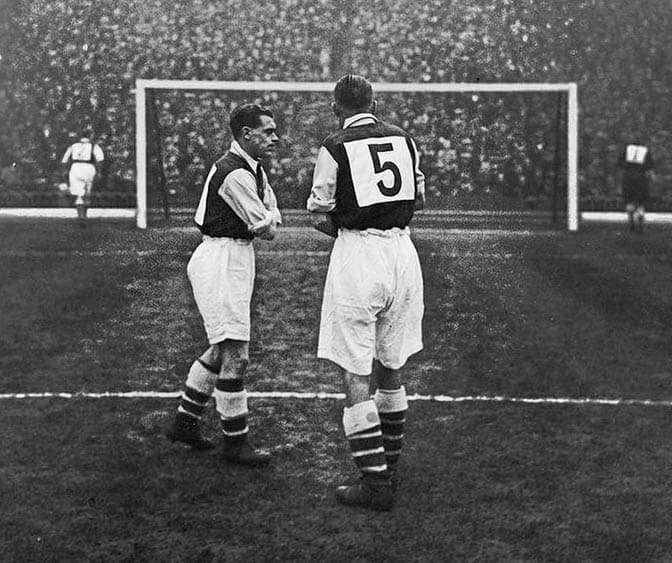
Shirt numbering debuted in professional European league football on August 25, 1928. Arsenal's Herbert Chapman introduced numbers for their match against Sheffield Wednesday, while Chelsea hosted Swansea Town wearing numbers. Under this initial system, one team wore numbers 1 through 11, while the other wore 12 through 22. The Football League Management Committee resisted the innovation for over a decade, but finally ruled shirt numbers mandatory for the 1939/40 season, assigning numbers 1 through 11 to the starting lineup based on position. South America's numbered debut came even earlier: Argentina was the first South American country to use numbered jerseys on June 10, 1923, during a friendly match between Scottish touring club Third Lanark and a local combined team called 'Zona Norte'. Both teams wore numbers 1 through 11, a sight that surprised the local crowd. When English club Chelsea toured South America in 1929 wearing numbered kits, local spectators nicknamed them 'Los Numerados' ('the numbered'), marking an early step in the adoption of squad numbers across South America. The 1993/94 season introduced fixed squad numbers in English football, allowing players to choose unconventional numbers — from Cristiano Lupatelli's goalkeeper Number Ten to Jonathan de Guzman's midfielder Number One.